

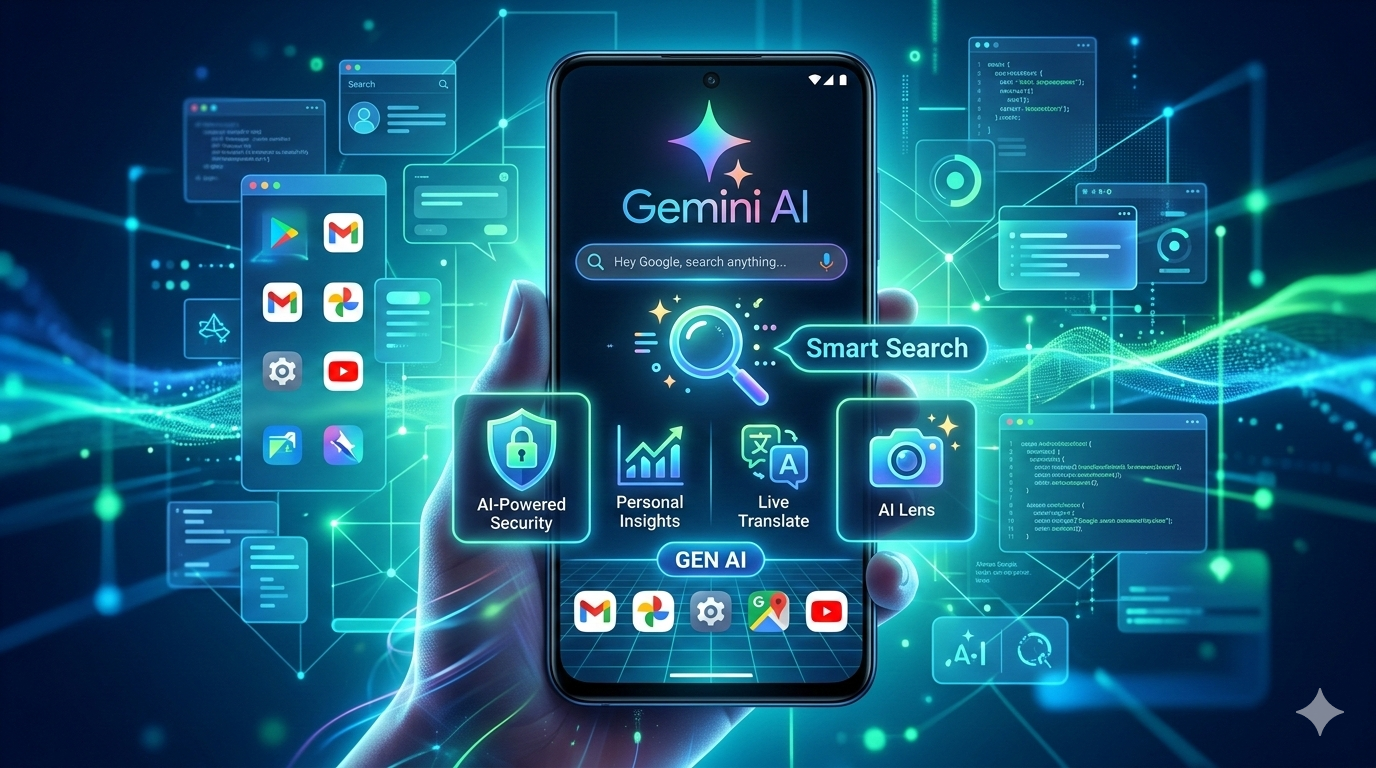
Android continues to evolve rapidly in 2026, driven by artificial intelligence, improved security systems, and a growing ecosystem of devices. Google has been steadily transforming Android from a traditional mobile operating system into an intelligent platform that anticipates user needs and automates daily tasks.
Recent announcements, including the March Pixel Drop, large-scale security updates, and new AI capabilities powered by Gemini, show how Android is shifting toward a more proactive and personalised experience.
In this article, we explore the most important Android developments in 2026 and what they mean for smartphone users.
Android Is Becoming an AI-First Platform
One of the most significant changes happening in Android is the deep integration of artificial intelligence across the operating system.
Google’s AI assistant Gemini is now replacing many traditional assistant features and is becoming the central intelligence layer of Android. Instead of simply responding to commands, Gemini is designed to understand context and perform complex actions on behalf of the user.
For example, newer Android devices now allow Gemini to complete multi-step tasks inside apps. This means users can request actions such as ordering groceries, booking rides, or finding restaurants without manually navigating through several apps. The AI performs the steps while allowing the user to monitor the process.
This shift represents a major milestone for Android because it moves the platform toward “agent-based computing”, where software performs tasks autonomously rather than simply responding to commands.
The March Pixel Drop Introduced Smarter Features
Google regularly releases feature updates known as “Pixel Drops” for its Pixel smartphones. The March 2026 Pixel Drop is one of the most significant updates in recent years, focusing heavily on AI-driven functionality. Several new tools have been introduced:
Circle to Search upgrades
The popular Circle to Search feature now recognises multiple objects in an image. Users can circle clothing items, plants, or objects on their screen and instantly receive detailed information or shopping results.
Gemini task automation
Gemini can now interact with third-party apps to perform real actions such as ordering food or arranging transport.
Magic Cue recommendations
The Magic Cue feature offers contextual suggestions, such as restaurant recommendations or travel ideas based on conversations.
Desktop mode support
Pixel devices can now connect to external displays and run a desktop-style interface for productivity tasks.
These changes show Google’s intention to make Android devices behave more like intelligent assistants rather than simple smartphones.
A Major Android Security Update Fixes 129 Vulnerabilities
Security continues to be one of Google’s highest priorities for Android.
In March 2026, Google released one of the largest Android security updates ever issued. The update fixed 129 vulnerabilities, including a critical zero-day exploit affecting Qualcomm graphics components.
Security researchers discovered that attackers were already exploiting the vulnerability in targeted attacks, potentially affecting journalists and other high-profile individuals.
Because of the severity of these vulnerabilities, Google urged Android users to install the update immediately.
This update highlights the importance of regular Android security patches and demonstrates how Google continues to strengthen the platform against modern cyber threats.
Android 15 Brought Stronger Privacy Controls
Although Android 15 launched earlier, its features are still shaping the Android experience in 2026.
One of the most notable improvements is a feature called Private Space. This acts as a secure container where users can hide sensitive applications such as banking or messaging apps. When the space is locked, these apps become invisible in notifications, settings, and app lists.
Android 15 also introduced AI-powered theft detection.
If a phone detects suspicious motion patterns such as someone snatching the device and running away, it automatically locks itself to protect the user’s data. This feature uses machine learning to recognise unusual movement patterns. Other improvements include:
- Better multitasking on tablets and foldable devices
- Improved system performance
- Enhanced privacy protections
- Updated notification management
These features aim to make Android both safer and more productive for users.
Google Play System Updates Are Improving the Entire Ecosystem
Another important development in Android is the expansion of Google Play system updates.
In the past, operating system improvements required full Android updates from device manufacturers. Now many improvements can be delivered directly through Google Play services and system updates.
The March 2026 system update introduced improvements to privacy, system management, and background processing across multiple Android devices including phones, tablets, TVs, and cars.
This modular update approach allows Google to deliver important improvements more quickly without waiting for manufacturers to release full system updates.
New Android Tools Are Expanding the Ecosystem
Android is no longer limited to smartphones. The operating system now powers a wide range of devices including cars, smart TVs, wearables, and tablets.
Recent Android feature announcements include several interesting additions:
Custom calling cards
Users can personalise how they appear when calling friends by selecting custom images, fonts, and colours.
Google Play Shorts
The Play Store now uses short video previews to help users discover apps before downloading them.
Android Auto games
New games can now be played in parked vehicles through Android Auto, providing entertainment for passengers.
These changes demonstrate Google’s broader vision of Android as a unified ecosystem across multiple device categories.
Find Hub Helps Recover Lost Items
Another useful Android innovation is the expansion of the Find Hub ecosystem.
Find Hub allows users to track personal items using Bluetooth trackers connected to Android devices. The system can even help recover lost luggage by sharing the location of the tracker with airlines.
Users maintain control over their data and can choose when to share the location of their items and when to disable tracking.
This feature shows how Android is becoming increasingly useful beyond just communication and entertainment.
The Future of Android: Android 16 and Beyond
While Android 15 is currently rolling out to many devices, development is already underway for the next versions of the operating system.
Android 16 is expected to introduce further improvements in:
- Artificial intelligence integration
- Battery optimisation
- Improved device compatibility
- Better support for foldable and large-screen devices
The development cycle of Android has also become faster. Google is releasing features throughout the year rather than waiting for a single annual update.
This approach allows Android to evolve continuously, similar to modern cloud platforms.
Why Android’s Evolution Matters
The Android ecosystem now powers billions of devices worldwide. As a result, even small improvements can have massive global impact.
The recent updates demonstrate three major trends shaping Android’s future.
Artificial intelligence will become the central interface of smartphones. Instead of tapping through menus, users will interact with AI that understands their intentions.
Security will continue to improve as cyber threats become more sophisticated. Regular security patches and system updates are critical for protecting user data.
The Android ecosystem will expand beyond smartphones. Cars, TVs, wearable devices, and smart home products are all becoming part of the Android environment.
These developments are transforming Android into a platform that connects every aspect of digital life.
Final Thoughts
Android in 2026 is undergoing one of its most important transformations since the platform was first introduced.
With Gemini AI performing complex tasks, major security improvements protecting users, and system updates arriving more frequently than ever, Android is becoming smarter, safer, and more integrated across devices.
The introduction of AI-driven features such as Circle to Search, contextual recommendations, and task automation indicates that smartphones are moving toward a future where technology actively assists users rather than simply responding to commands.
As Android continues to evolve through upcoming versions like Android 16 and beyond, one thing is clear: the platform is shifting toward an intelligent, connected ecosystem that aims to make everyday digital life easier and more productive.